For years I treated sensitivity like a defect. Too reactive. Too easily flooded. So I built walls, toughened up, told myself I was finally handling it better.
I was wrong about that for years.
The problem wasn’t feeling too much. The problem came later — when the same stressor stopped producing any feeling at all. When the third deadline in a week felt identical to the first. When the conflict that once wrecked my sleep became something I could eat through, scroll through, keep moving through without a skipped breath.
This is sensory gating. Your brain learned the signal. And learning, in the nervous system, means filtering. What repeats without resolution gets downgraded from threat to noise.
The cost isn’t what you notice. It’s what you no longer can.
Your baseline shifted somewhere you didn’t feel it happening. The body adapted to a frequency it couldn’t escape, so it stopped registering the frequency as information. This is not resilience. This is neurological accommodation — the same mechanism that lets you stop smelling your own perfume while everyone else still enters the room you’ve left.
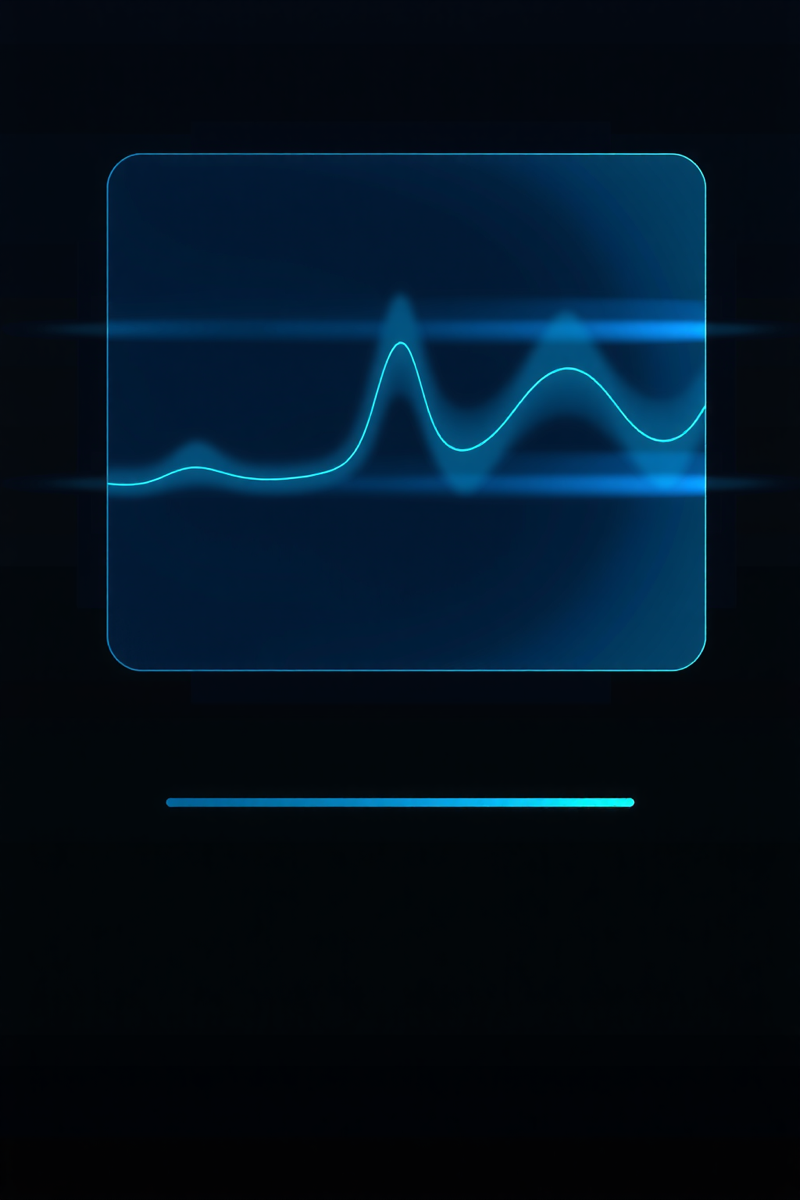
Research calls it P50 suppression. The brain’s response to repeated stimuli attenuates. Practically: your coffee still works, but you need more. Your rest still happens, but it doesn’t restore. You are not becoming stronger. You are becoming numb at precisely the depth where strength would have mattered.
And here is the reframe that undoes it:
The numbness is not your enemy. It is your body keeping you alive inside conditions it couldn’t change. The system that filtered out the stress is the same system that kept you functioning. Your adaptation was loyalty. Misplaced, perhaps. But loyal.
You do not heal this by demanding feeling return. You heal it by changing the signal — by introducing something your brain cannot yet predict.
Two practices for today:
The Silence Test Set a timer for four minutes. Not meditation. Not breathwork. Simply silence without purpose. Notice where your attention goes to find noise. That seeking is the habit. Let it seek. Let it find nothing. Do not fill the gap. The gap is where your baseline remembers its original setting.
The Novelty Injection Before your next routine task — the commute, the email, the meal — introduce one element your body cannot anticipate. A different route. A different chair. A different hand for your toothbrush. The brain wakes to what it cannot predict. Prediction is where the numbness lives.
Journaling prompt: What stopped registering in my life not because it healed, but because I stopped listening?
“The same river twice” — Heraclitus, paraphrased — “and yet we step in without noticing it is not the same self that enters.”
Your nervous system is not broken. It is waiting for a signal worthy of its attention. The question is whether you will become interesting enough to yourself to send one.
© 2026 Sparklebox | Written by Elle Vida
◈ Your baseline just became visible.
What you felt while reading — the numbness, the threshold, the adapted frequency — that is not who you are. It is what your nervous system learned.
→ The Adaptation Protocol — The Reset. Why you got stuck at Baseline Beta.
→ The Frequency Upgrade — The Map. Where your brain operates.
→ The Path — Map + Reset together.
The Map showed you the territory. The Reset shows you why the lock engaged.